Poured at Juraku
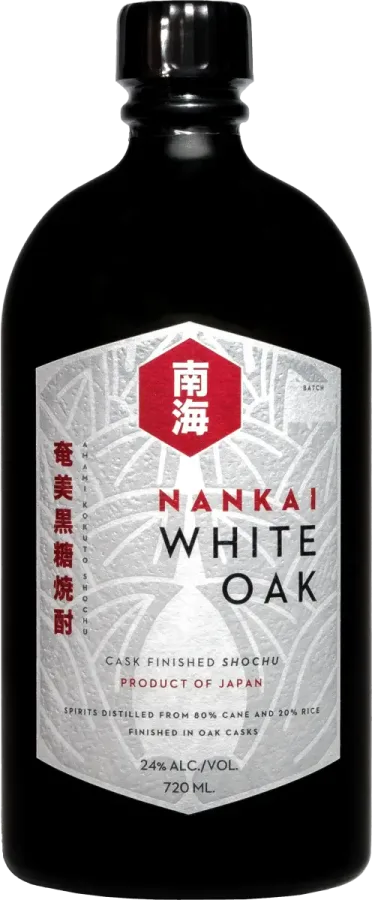
Nankai White Oak Shochu
Amami Oshima Kaiun Shuzo · Kagoshima (Amami Oshima) · Kokuto (brown sugar)
- cask aged
Pour this first
Nankai White Oak Shochu, long, with Ginger beer, and Cinnamon.
Kokuto shochu and ginger beer is a dark and stormy at half the proof
One part shochu to three or four parts mixer, plenty of ice. If it tastes thin, go two to three next time. That is the whole method.
What it tastes like
A kokuto shochu rested briefly in white oak, which layers vanilla, spice and toasted wood onto the clean, lightly sweet Amami base. An elegant 24 percent, easy alongside food.
- kokuto
- vanilla
- spice
- cask
- smooth
- rum-like
- Sweet
- Body
- Aroma
- Fruit
- Floral
- Grain
- Earth
- Umami
- Base
- brown sugar (kokuto)
- ABV
- 24%
- Aging
- brief rest in white oak
What to mix with it
Tap a family to narrow it down. Every suggestion carries its reasoning, so if the reasoning does not convince you, ignore the suggestion.
Banana
Strong matchRipe banana, muddled or as a syrup. The banana note in ginjo sake is real chemistry, not a metaphor.
Cinnamon
Strong matchA stick in hot water with the spirit, or a light syrup. Winter.
Coconut
Strong matchCoconut water for lengthening, coconut milk or cream for weight.
Ginger
Strong matchFresh juice, a syrup, or a good ginger beer. The spice that makes a low-proof drink feel like it has a backbone.
Lime
Strong matchSharper and greener than lemon. The citrus for anything built on brown sugar or tropical fruit.
Pineapple
Strong matchFresh juice, or grilled wedges for a smokier drink. The awamori fruit.
Vanilla
Strong matchA split bean in a syrup, or a good extract, in small amounts.
Kokuto (brown sugar) syrup
Strong matchOkinawan or Amami kokuto dissolved one to one in water. Molasses, minerals, a little salt.
Amaro
Strong matchMontenegro, Nonino, Averna. Equal parts with a dark shochu over ice is a whole drink.
Aromatic bitters
Strong matchAngostura or a Japanese aromatic. Two dashes.
Black tea (Earl Grey)
Strong matchCold-brewed Earl Grey brings bergamot; plain black tea brings tannin. For the aged and brown-sugar bottles.
Coffee (cold brew)
Strong matchCold brew, unsweetened. For barley, brown-sugar, cask-aged and awamori bottles; it will bury a daiginjo.
Mint
Good matchSlapped, not muddled to bits. Mint reads as cold, which makes any low-proof drink feel more refreshing.
Cardamom
Good matchA few crushed pods, or a syrup. Floral, citrusy and warm at once; it bridges fruit and spice.
Kumquat
Good matchEaten whole, peel and all. Muddle a few in a glass; the peel gives bitterness, the flesh gives tartness.
Lemon
Good matchFresh juice, never bottled. The building block of the lemon sour, and the fastest way to give sake the acidity it does not have on its own.
Orange
Good matchFresh orange juice for a sparkling sake mimosa; the peel for stirred drinks with aged bottles.
Star anise
Good matchOne star, steeped, for the dark bottles.
Togarashi (chili)
Good matchA rim of shichimi, or a slice of fresh chili. Heat on fruit, not on rice.
Orgeat (almond syrup)
Good matchAlmond syrup with a touch of orange blossom. The tiki sweetener, and kokuto shochu is a tiki spirit waiting to happen.
Red aperitivo bitter (Campari-style)
Good matchCampari, Aperol, or a Japanese bitter like Kina. The aperitivo hour is where sake and shochu make the most sense as cocktails.
Cream
Good matchHalf-and-half or heavy cream, in the after-dinner glass only.
Fernet
Good matchA quarter ounce. Menthol and bitterness, for the darkest bottles.
Ginger beer
Good matchA spicy one, not a sweet one. The mule format works for every dark shochu and most sake.
Hojicha
Good matchCold-brewed or hot. Roasted green tea, low in bitterness, high in toast. The oyuwari of teas.
Matcha
Good matchWhisked into a slurry first, never dumped in dry. Bitter, umami and creamy at once.
Milk
Good matchCold whole milk. Shochu milk-wari is a real order in Kyushu, not a dare.
Rosemary
Good matchA sprig, lightly toasted with a lighter, as garnish or stirred. Strong; a little.
Black pepper
Good matchA few grinds over the top. Aroma more than heat.
Blood orange
Good matchOrange with a raspberry edge. Winter fruit; worth waiting for.
Grapefruit
Good matchBitter, bright and forgiving. Ruby or white both work; white is drier. The grapefruit sour is a real bar order in Japan, not a novelty.
Kabosu
Good matchOita's citrus, softer than sudachi. Bartenders in Oita mix it with the local barley shochu and soda.
Kiwi
Good matchMuddled with the seeds. Green, sour and refreshing, and cheap year round.
Lychee
Good matchFresh in early summer, canned in syrup the rest of the year (drain it). The signature aroma of a whole school of imo shochu.
Mango
Good matchRipe mango puree. Needs lime beside it or it goes flat.
Mikan (satsuma)
Good matchSweet, low-acid Japanese mandarin. Juice it or drop segments in a glass. It needs a squeeze of something sharper alongside.
Passion fruit
Good matchThe most useful tropical fruit for mixing: intensely aromatic and properly sour. Pulp with seeds, or a good puree.
Sansho pepper
Good matchA pinch of ground sansho over the top, or a few peppercorns steeped. Numbing, citrusy, green.
Sudachi
Good matchA small green citrus from Tokushima, sharper and more herbal than lime. Sold frozen or as juice in Japanese markets.
Wasabi
Good matchA rice-grain amount, dissolved. For the savory, cucumber glass, not the fruit one.
Yuzu
Good matchThe Japanese citrus that tastes like grapefruit, mandarin and lemon at once, with a floral peel. A little zest or juice goes a long way.
Maple syrup
Good matchDark, in small amounts, for the cask and sweet-potato bottles.
Amazake (sweet koji rice)
Worth tryingThe non-alcoholic koji drink, sweet from rice starch alone. Blend with the spirit and ice; it is a shochu smoothie.
Apple
Worth tryingCold-pressed juice or thin slices. Green apple is the aroma many ginjo sake already carry, so this is amplification rather than addition.
Apricot
Worth tryingFresh in season, dried the rest of the year. Apricot and umeshu share a family, which is why they get along.
Basil
Worth tryingMuddled gently with citrus. Thai basil brings anise, Italian basil brings pepper.
Blackberry
Worth tryingLate summer fruit with a savory edge. For the deeper bottles.
Calpico (cultured milk)
Worth tryingThe concentrate, diluted with soda. Yogurt-sweet and sour. The Calpis sour is a national drink in Japan.
Cherry
Worth tryingFresh in early summer; morello or amarena in syrup otherwise. Dark cherry for aged bottles, bright cherry for sparkling.
Dill
Worth tryingFronds, gently muddled. For the savory, saline glass.
Egg white
Worth tryingOne white, dry-shaken. Texture without flavor.
Fig
Worth tryingFresh figs muddled, or fig jam. For the aged and the brown-sugar bottles only.
Genmaicha
Worth tryingGreen tea with popped, toasted rice. Cold-brew it. Comfort in a glass.
Gentian (Suze-style)
Worth tryingSuze or Salers. Bitter root, bright yellow. A little in a highball changes everything.
Green tea (sencha)
Worth tryingCold-brewed sencha, unsweetened. The green tea highball is one of the most common ways shochu is actually drunk in Japan.
Hot water (oyuwari)
Worth tryingHot water in the glass first, spirit poured on top so it mixes itself. Around 40C in the glass is the sweet spot. This is not the only way, it is one way.
Jasmine tea
Worth tryingCold-brewed. Floral without sugar. The jasmine highball is a real menu item in Japan.
Kinome (sansho leaf)
Worth tryingYoung sansho leaves, clapped between the palms and floated. Hard to find outside Japanese markets in spring, worth the hunt.
Lemongrass
Worth tryingBruised stalks steeped in the spirit, or a syrup. Citrus without acid, which is useful when you want aroma but not sourness.
Makrut lime leaf
Worth tryingTorn leaves steeped briefly. Perfumed citrus without juice.
Miso
Worth tryingWhite miso whisked into a syrup, a small spoon per drink. Salty, sweet and savory at once.
Mugicha (barley tea)
Worth tryingCold, unsweetened barley tea. Every Japanese fridge has a pitcher in summer. Mix one to three over ice.
Oat milk
Worth tryingThe dairy-free milk that tastes of cereal, which is why it likes grain spirits.
Oolong tea
Worth tryingUnsweetened, cold. One part shochu to three or four parts tea, over ice. It is the drink half of Japan orders with dinner.
Orange liqueur
Worth tryingCointreau or a dry curaçao. The sweet-and-citrus half of any sour.
Sea salt
Worth tryingA pinch in the glass or a half rim. Salt does not make a drink salty in small amounts; it makes it taste more like itself.
Soda water
Worth tryingCold, and fizzy enough to matter. One part spirit to three or four parts soda for shochu; one to one for sake.
Sparkling wine (brut)
Worth tryingDry cava or crémant. Topping sake with it adds the acid and the bubbles sake lacks in one pour.
Thyme
Worth tryingGentler than rosemary. Steep a sprig, or use a thyme syrup.
Toasted sesame
Worth tryingA sesame syrup, or a rim of ground sesame and salt. Toasty and rich.
Agave syrup
Worth tryingThe neutral sweetener. Use when you want to balance acid without adding a flavor.
Honey
Worth tryingDiluted one to one with warm water so it mixes cold. A little goes far; taste before adding more.
Yuzu marmalade (yuja-cha)
Worth tryingThe Korean-style yuzu preserve sold in jars. A spoon in hot water with shochu, or shaken cold.
Ways to serve it
- Straight
- On the rocks
- With soda
Brown sugar shochu is legally only made on the Amami islands, and it is a cane spirit in everything but name. Every rum drink you know is available to it at two thirds the alcohol.
Cocktails other people made
Where this came from
- src/content/blog/nankai-shochu.md
- menu-full.json:japanese-shochu
Filed under kokuto shochu.