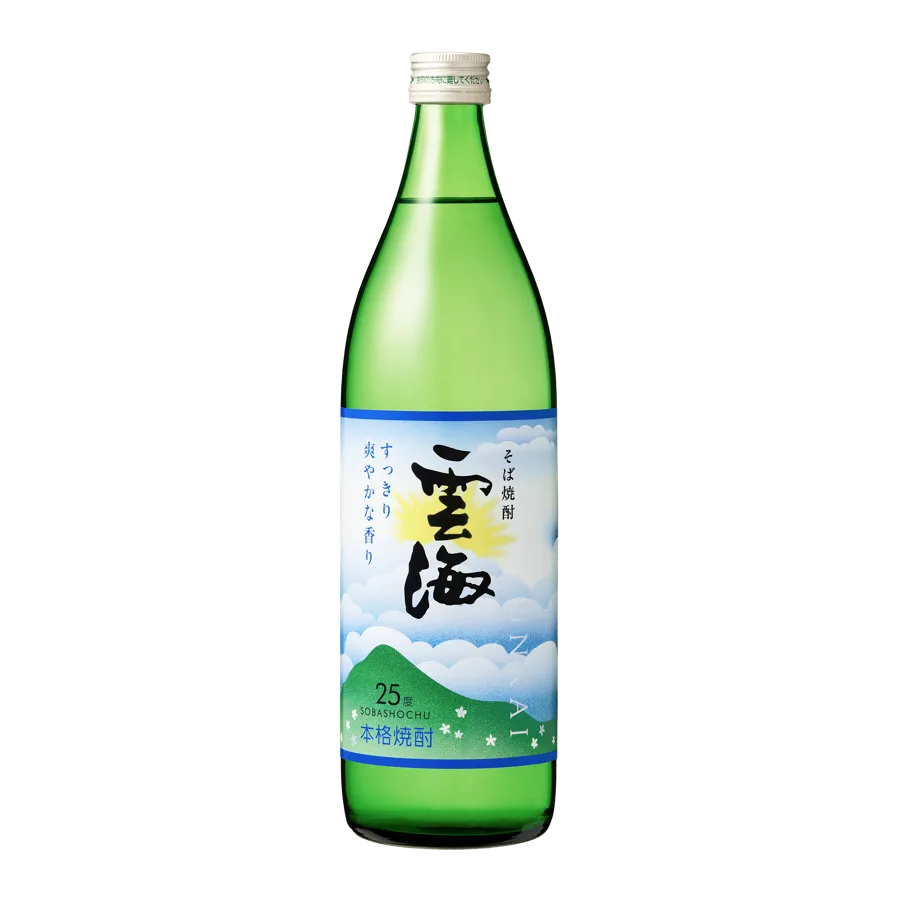
Soba Unkai Shochu
Unkai Shuzo · Miyazaki (Gokase) · Soba (buckwheat)
- white koji
Pour this first
Soba Unkai Shochu, long, with Ginger beer, and Hojicha.
Soba shochu is usually vacuum distilled and light, which is exactly the profile a highball flatters. The soba highball is a standard order in a soba restaurant, not an experiment.
One part shochu to three or four parts mixer, plenty of ice. If it tastes thin, go two to three next time. That is the whole method.
What it tastes like
A soba shochu from the distillery that invented the category, blended from buckwheat, barley and rice with a fruity house yeast isolated from the distillery's own buckwheat flowers. Creamy with a green grass note, earth and fresh vanilla bean, light and clean on the finish.
- buckwheat
- nutty
- earthy
- vanilla
- creamy texture
- dry
- Sweet
- Body
- Aroma
- Fruit
- Floral
- Grain
- Earth
- Umami
- Base
- buckwheat, barley and rice
- Koji
- barley koji, rice koji and buckwheat koji (three separate koji)
- Yeast
- proprietary soba flower aroma yeast, isolated from the distillery's own buckwheat flowers
What to mix with it
Tap a family to narrow it down. Every suggestion carries its reasoning, so if the reasoning does not convince you, ignore the suggestion.
Ginger beer
Strong matchA spicy one, not a sweet one. The mule format works for every dark shochu and most sake.
Hojicha
Strong matchCold-brewed or hot. Roasted green tea, low in bitterness, high in toast. The oyuwari of teas.
Hot water (oyuwari)
Strong matchHot water in the glass first, spirit poured on top so it mixes itself. Around 40C in the glass is the sweet spot. This is not the only way, it is one way.
Grapefruit
Good matchBitter, bright and forgiving. Ruby or white both work; white is drier. The grapefruit sour is a real bar order in Japan, not a novelty.
Orgeat (almond syrup)
Good matchAlmond syrup with a touch of orange blossom. The tiki sweetener, and kokuto shochu is a tiki spirit waiting to happen.
Shiitake
Good matchA dried shiitake steeped in the spirit for a day. Savory and strange in the best way.
Toasted sesame
Good matchA sesame syrup, or a rim of ground sesame and salt. Toasty and rich.
Black tea (Earl Grey)
Good matchCold-brewed Earl Grey brings bergamot; plain black tea brings tannin. For the aged and brown-sugar bottles.
Coffee (cold brew)
Good matchCold brew, unsweetened. For barley, brown-sugar, cask-aged and awamori bottles; it will bury a daiginjo.
Genmaicha
Good matchGreen tea with popped, toasted rice. Cold-brew it. Comfort in a glass.
Ginger ale
Good matchThe gentle ginger. For bottles that a ginger beer would bully.
Green tea (sencha)
Good matchCold-brewed sencha, unsweetened. The green tea highball is one of the most common ways shochu is actually drunk in Japan.
Jasmine tea
Good matchCold-brewed. Floral without sugar. The jasmine highball is a real menu item in Japan.
Kombucha
Good matchA plain or ginger kombucha. It brings acid, bubbles and funk, all things sake is short of.
Lemon soda (ramune, Sanpellegrino)
Good matchThe shortcut to a sour when there is no fresh lemon. Less sweet is better.
Matcha
Good matchWhisked into a slurry first, never dumped in dry. Bitter, umami and creamy at once.
Mugicha (barley tea)
Good matchCold, unsweetened barley tea. Every Japanese fridge has a pitcher in summer. Mix one to three over ice.
Oolong tea
Good matchUnsweetened, cold. One part shochu to three or four parts tea, over ice. It is the drink half of Japan orders with dinner.
Soda water
Good matchCold, and fizzy enough to matter. One part spirit to three or four parts soda for shochu; one to one for sake.
Sparkling wine (brut)
Good matchDry cava or crémant. Topping sake with it adds the acid and the bubbles sake lacks in one pour.
Cold water (mizuwari)
Good matchSoft water, cold, over ice or not. One to one is normal. Mix a day ahead (maewari) and the edges round off.
Tonic water
Good matchA dry tonic (Fever-Tree, Q). One part spirit, three parts tonic, a citrus wedge.
Agave syrup
Worth tryingThe neutral sweetener. Use when you want to balance acid without adding a flavor.
Black pepper
Worth tryingA few grinds over the top. Aroma more than heat.
Blood orange
Worth tryingOrange with a raspberry edge. Winter fruit; worth waiting for.
Cranberry
Worth tryingUnsweetened juice. Sharp and a little tannic, useful for cutting sweetness.
Fino sherry
Worth tryingFino or manzanilla. Savory, salty, bone dry.
Ginger
Worth tryingFresh juice, a syrup, or a good ginger beer. The spice that makes a low-proof drink feel like it has a backbone.
Honey
Worth tryingDiluted one to one with warm water so it mixes cold. A little goes far; taste before adding more.
Kabosu
Worth tryingOita's citrus, softer than sudachi. Bartenders in Oita mix it with the local barley shochu and soda.
Kokuto (brown sugar) syrup
Worth tryingOkinawan or Amami kokuto dissolved one to one in water. Molasses, minerals, a little salt.
Kombu
Worth tryingA small piece steeped in the bottle overnight. Savory depth without salt.
Kumquat
Worth tryingEaten whole, peel and all. Muddle a few in a glass; the peel gives bitterness, the flesh gives tartness.
Lemon
Worth tryingFresh juice, never bottled. The building block of the lemon sour, and the fastest way to give sake the acidity it does not have on its own.
Lime
Worth tryingSharper and greener than lemon. The citrus for anything built on brown sugar or tropical fruit.
Maple syrup
Worth tryingDark, in small amounts, for the cask and sweet-potato bottles.
Mikan (satsuma)
Worth tryingSweet, low-acid Japanese mandarin. Juice it or drop segments in a glass. It needs a squeeze of something sharper alongside.
Miso
Worth tryingWhite miso whisked into a syrup, a small spoon per drink. Salty, sweet and savory at once.
Olive brine
Worth tryingA bar spoon, no more. Salt, and the savory note that comes with it.
Pickled ginger (gari)
Worth tryingA spoon of the brine, and a slice as garnish. Sweet, sour and hot at once.
Sea salt
Worth tryingA pinch in the glass or a half rim. Salt does not make a drink salty in small amounts; it makes it taste more like itself.
Soy sauce
Worth tryingA drop. Think of it as salt with depth, for the savory glass only.
Sudachi
Worth tryingA small green citrus from Tokushima, sharper and more herbal than lime. Sold frozen or as juice in Japanese markets.
Umeboshi
Worth tryingOne salted plum, crushed with a spoon in the glass. Salty, sour, savory.
Yuzu
Worth tryingThe Japanese citrus that tastes like grapefruit, mandarin and lemon at once, with a floral peel. A little zest or juice goes a long way.
Yuzu marmalade (yuja-cha)
Worth tryingThe Korean-style yuzu preserve sold in jars. A spoon in hot water with shochu, or shaken cold.
Chamomile
Worth tryingCold-brewed chamomile as a lengthener, or steeped in the spirit.
Elderflower
Worth tryingCordial or the liqueur. Muscat, lychee and honey in one flower.
Hibiscus
Worth tryingCold-brewed hibiscus tea: sour, cranberry-red and floral. Acid and color in one pour.
Jasmine
Worth tryingA syrup or a few dried blossoms steeped. See jasmine tea for the long drink.
Osmanthus (kinmokusei)
Worth tryingDried osmanthus flowers steeped, or the syrup. Apricot and honey, and the smell of October in Japan.
Ways to serve it
- On the rocks
- With soda
- Mizuwari (with water)
Buckwheat shochu is nutty and quiet, and it is the one category where roasted things are the answer rather than a compromise. Hojicha and mugicha are better mixers for it than any fruit.
Cocktails other people made
Where this came from
- src/content/blog/unkai-buckwheat-shochu.md
- menu-full.json:japanese-shochu
Filed under soba shochu.